
“How come Black people get a month, and we don’t?” part 1 of 4
Part One: The Story We Think We Know
It is usually said casually.
Sometimes as a joke.
Sometimes as a side comment in a conversation.
But there is a lot of weight in that question.
And there is a lot underneath it.
There is a lot that could be said in response.
However, I am going to answer this question in four parts.
This is Part One.
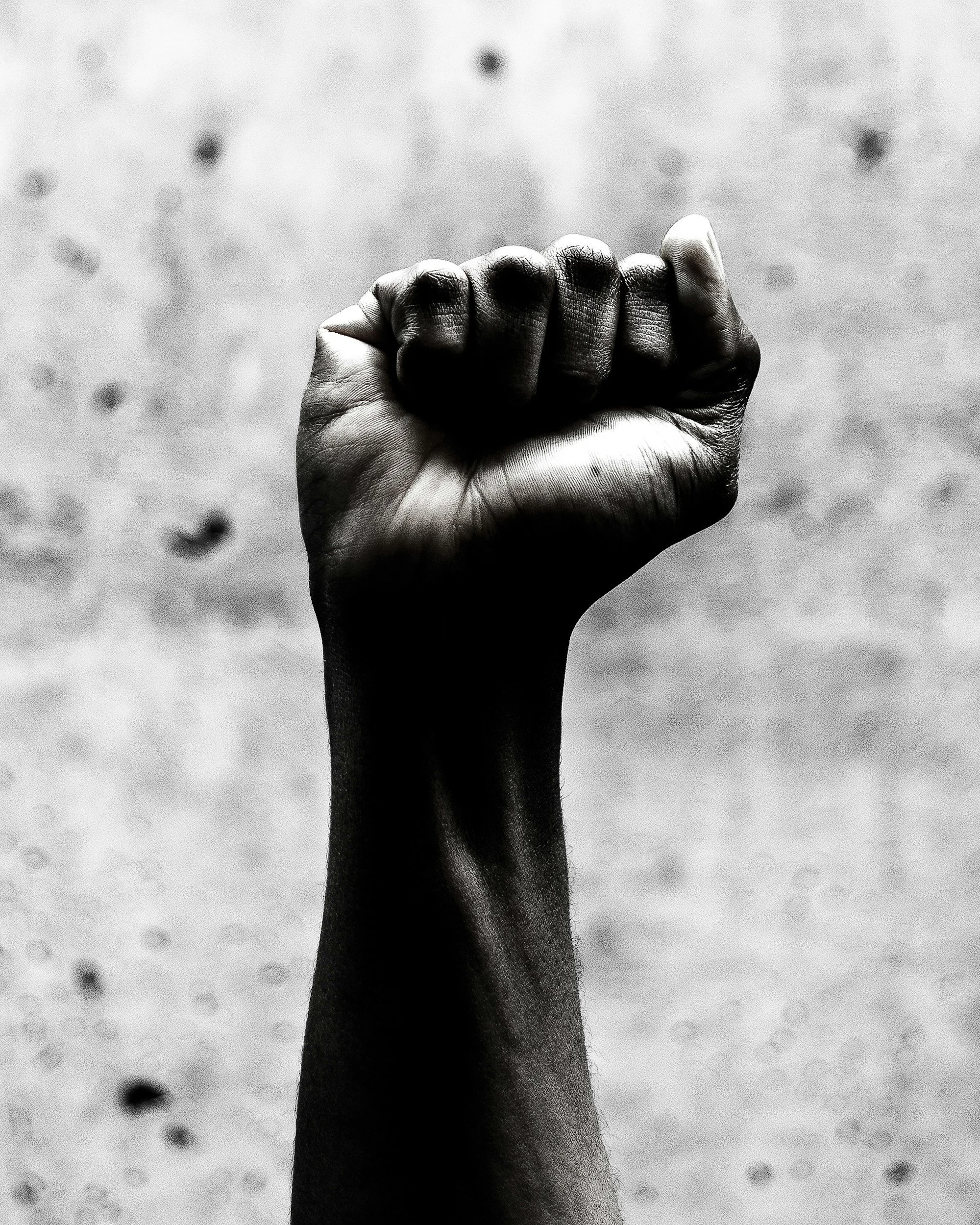
Before anything else, it matters to say this clearly.
Black History Month is not about separating history. It is about correcting what was ( and currently still is) intentionally left out of history.
For most of American education, media, and public memory, the dominant story of this country has been told from one primary perspective ( His- story). That perspective has been centered, normalized, and repeated year after year, from January through December. ( and even during ‘Black history month … wouldn’t you know )
Black history has always been a part of American history. But it has not always been treated as equally important, equally visible, or equally worthy of being taught in full. To this day, there is controversy on whether or not Black history is needed in school since it is too graphic for our children and scholarly adults. The argument is why do we need to know about such atrocities? Why should we talk about what happened so long ago ? The argument is by telling the whole truth, we end up creating a society that hates its own nation and the people in it. ( I think we just need space to process it because it’s heavy.)
It’s important to note that February does not replace the rest of history. It does not erase anyone else’s ability to share any other story.
It simply creates intentional space for a history that was and in many ways still is systematically ignored, minimized, or distorted for generations.
And that is not accidental.
It is rooted in the reality that Black Americans were not simply excluded from power. They were excluded from the story.
One of the most foundational reasons Black History Month exists is because of the erasure of identity.
Not just names in textbooks.
But their entire identity.
(Unfortunately a lot of people do know about this one and in my experience and others I’ve talked with when we sometimes mention the erasure of identity; I see people’s eyes gloss over and apathy takeover, and sometimes the ugly parts of humanity come out of people’s moth in response to this truth.)
When we talk about identity, we are talking about their Culture. Languages. Family systems. Tribal and ethnic origins. A distortion of spiritual and religious connections.
Connection to ancestry.
During the transatlantic slave trade and throughout slavery in the United States, African people from many different regions and cultures were forcibly taken, renamed, separated from their families, and intentionally stripped of cultural continuity. Enslaved people were often prohibited from speaking their native languages and practicing their traditions.
All as a strategy of control.
When people lose their names, their history, and their connection to who they come from, it becomes easier to control how they see themselves.
It becomes easier to redefine their humanity. Or erase it all together for “Black” people because the narrative became that these human beings were actually subhuman (3/5 human) and creating a science in order to prove Black people’s lack of humanity. ( Carolus Linnaeus & Samuel Morton)
And that erasure and minimization did not end when slavery ended.
It carried forward into segregation, into housing policy, into education systems, community policing and in so many areas, including in today’s conversations with various different people.
And this is also where erasure and minimization continue today.
Because many people genuinely believe they already know Black history.
But what most people actually know is the dominant narrative of Black history.
The version that leaves room for people to believe a very particular story about how things happened.
And it goes a little something like this:
We had slavery.
It was bad.
People were beaten.
A couple slaves tried to revolt and were shut down.
A couple had successful escapes.
Anomalies like Harriet Tubman and Nat Turner caused a lot of “trouble” but through luck helped others make it to freedom.
Some horrible things happened.
Then it ended.
People were freed.
There was segregation.
People were bullied hard.
There were some lynchings.
Then Martin Luther King showed up. He had a dream.
Rosa Parks sat down.
A few “good ones” spoke out and then now it is over. And it’s in the past. We need to move on and get over it.
Sound familiar?
There is a narrative that Black Americans should be grateful now that we are no longer enslaved.
And in our gratitude, we do not need to talk about the past. That we should forget and move on.
But the problem is, that narrative of the story is incomplete.
And it can be very misleading.
Because historically, there were many organized revolts, uprisings, escape networks, and deeply coordinated resistance efforts across the colonies and later the United States. There were organized intelligence systems created in order to resist, organize, create underground railroads, and stage many different ways for people to be free.
The dominant narrative strips away the humanity, the intelligence, and the strength of Black people.
It removes the depth of what was actually happening.
That dominant narrative creates a more palpable version of what happened and makes it to where people wouldn’t want to go searching for more or know the reality of how deep and layered the experiences of Black Americans really were.
I come across people all the time that are very loud and confident making claims that Black Americans haven’t contributed anything meaningful to society. I’m always taken aback. But also, that’s what happens when the story is not fully told or understood over centuries. It doesn’t get preserved and instead it’s distorted , minimized and forgotten.
And that is exactly why this matters.
Not because Black people want special treatment.
Not because we are stuck in the past.
But because when a story is only told one way for generations, people begin to believe they fully understand something they have only ever been given a partial version of.
And when that partial version becomes the dominant version, it shapes how people see Black Americans today.
It shapes what people assume about our intelligence.
About our contributions.
About our resilience.
About our worth.
And it shapes how easily people dismiss ongoing harm by saying, “that was a long time ago.”
So I want to end Part One with two honest questions.
First:
What is your dominant understanding of Black American history?
Second:
At what point in history did Black Americans ever ask for a handout, instead of asking for repair, restoration, and compensation for harm that was done to them?
This is Part One.
